[New Publication]Rural Survey 2008-2010

2011 August 12
by Globalization Monitor

Rural Survey 2008-2010

This is a survey conducted by the China Labor Study Group and published by Globalization Monitor. In three consecutive year from 2008-2010, the China Labor Study Group trained dozens of rural migrant workers, who were returning home for the Chinese new year holiday, so that they could conduct interviews with their fellow villagers. The themes of each year’s survey were as follows:

2008:

1 How far were government policies of giving material support to rural communities implemented at a grassroots level?

2 The present situation of the peasant economy and its difficulties.

3 The administration of village affairs through Rural Committees.

2009:

1 The present situation of the peasant economy and its difficulties.

2 The real situation concerning the non-market exchange of farm land among village households and how farmers view this.

3 How collectively owned lands were developed and how democratic the election and administration of Rural Committees were.

4 The implementation of the Central government’s policy of encouraging peasants to set up their own businesses.

2010:

1 The effect of the economic crisis on the employment and livelihoods of rural households and their migrant workers.

2 How peasants assessed the effectiveness of government’s policies in supporting peasants to overcome the economic crisis.

3 How far the rural cadres were able to implement government policies in general.

The report is only available in Chinese. Please Click here to download: 2008-2010农村及民工调查 (update).pdf

August 9, 2011

New Report: China’s Water Crisis and the Privatization of Urban Water in Kunming

2011 July 13

New Report: China’s Water Crisis and the Privatization of Urban Water in Kunming

Download the Full Report

This report is a follow-up of our pilot research published in April, 2010The Reform of the Urban Water Supply in Southern China[1]. In the previous report, we studied the social, economical and political impacts of water privatization in six cities among the southern region, by conducting surveys and in-depth interviews. The results from the pilot study provided us an overview of the historical development, as well as some useful empirical data to unveil the problems faced by the Chinese people due to the privatization.

In order to further investigate the issues of urban water supply brought about by the privatization of urban water services, we include in this report the results of the additional surveys and in-depth interviews that we conducted in Kunming of the Yunnan Province in 2010 and the most recent developments in the six studied cities in terms of urban water supply. This new report also identifies the recent trends and characteristics of the urban water reform, and investigates the degree of privatization of China’s urban water by mapping the models of the provision of water supply in different cities throughout the country.

read more…

[Activity Adds] No Nukes Dreamers Film Festival

2011 June 24
by Globalization Monitor

非核夢想家電影節

No Nukes Dreamers Film Festival

主辦:反核之眾 Hong Kong People Against Nukes
費用全免 Free Admission
地點:塔冷通心靈書舍 Talentum Bookshop
油麻地窩打老道20號金輝大廈1樓6室(油麻地港鐵站B2出向左望)
Rm 6, 1/F, 20 Waterloo Road, Yaumatei (Exit B2, Yaumatei Train Station)
電話:2782 2027

內容 Programme

7月15日 (星期五) July 15 (Friday)

* 7:15-8:06pm 核電爭議 Nuclear Controversies, 2004, 51min,

中文字幕 w/Chinese subtitles, 導演 DirWladimir Tchertkoff

有關1986年切爾諾貝爾核災對人類健康的影響-誰是「專家」? On the health effects of the 1986 Chernobyl accident - what is “scientific expertise”?

* 8:10 - 9:15 pm 討論:核電謊言與「專家」知識
Discussion: How nuclear lies are made and made possible

7月16日 (星期六) July 16 (Saturday)

* 1:30-3:04pm 畸愛博士,或:我如何學習終止憂慮及愛上核彈 Dr. Strangelove, Or: How I Learnt To Stop Worrying And Love The Bomb, 1964, 94min,

中文字幕 w/Chinese subtitles, 導演DirStanley Kubrick

一九六零年代諷刺超級大國玩核經典電影 A classics satire on the superpowers’ playing with nukes

* 3:10-5:21pm 絲活的故事 Silkwood, 1983, 131min,

w/ English subtitles, 導演:Mike Nichols

根據真人真事改編,核燃料廠工會成員絲活揭露廠方違反安全守則而引發的奪命下場 A film on the nuclear fuel plantworker Silkwood

* 6:10-6:34pm 犧牲 The Sacrifice, 2003, 24min,

w/ English subtitles, 導演DirWladimir Tchertkoff

關於切爾諾貝爾的「清理」工人 About the liquidators at Chernobyl

* 6:35-7:09pm 表層之下 Under the Surface, 2011, 34min,

w/ English subtitles, 導演 DirSager Klara

瑞典山區尋找鈾礦的不義之舉 A suggestive account of the hunt for uranium in the Swedish mountains

* 7:15-8:15pm 討論:核戰與核電 - 「東西陣營」的年代及有權與無權的差異
Discussion: Nuclear war and nuclear power plants - “East” and “West”, the “Haves” and “Have Nots”

China’s dominance of shipping container manufacturing: the cost to workers’ health

2011 June 21
by Globalization Monitor

China’s dominance of shipping container manufacturing: the cost to workers’ health

Globalization Monitor

February 2011

Introduction

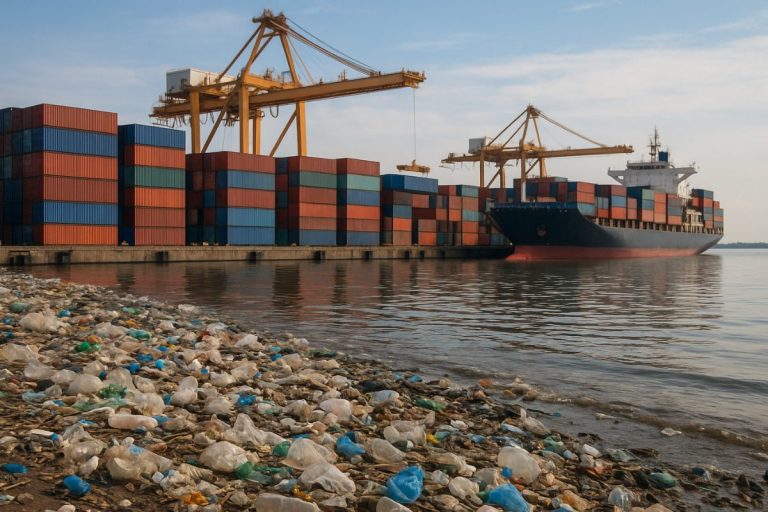
As of 2008, almost 97 in every 100 shipping containers in the world were manufactured in China. Chinese container manufacturers have made the most of their proximity to massive export production zones and abundant supply of cheap labor, and combined these with ongoing product innovation to comprehensively out-compete their rivals and dominate the industry over the course of the last 15 years. At the peak of global shipping volumes before the 2008 financial crisis, China’s manufactured over 4 million twenty-foot equivalent units (TEU) in standard dry cargo containers in a single year. [1] The Global Financial Crisis more or less halted new container construction from October 2008 to late 2009, but production has been picking up sharply in 2010. Towards the end of the year, factories could not keep up with demand from shipping liners and container leasing companies.

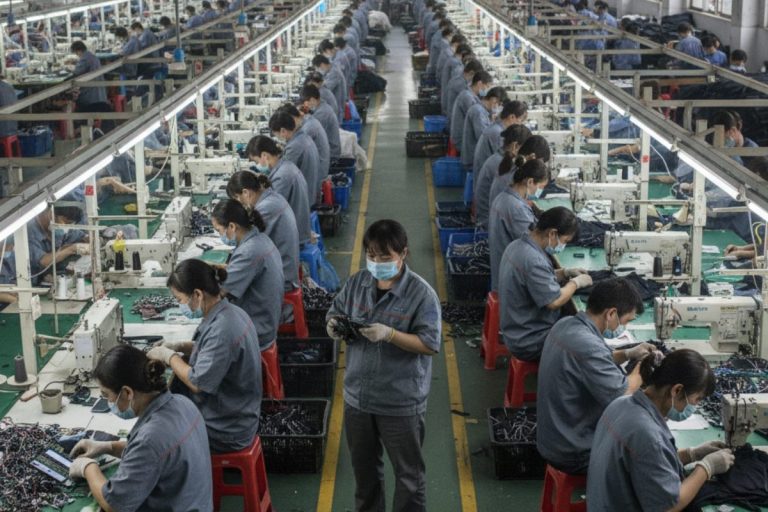
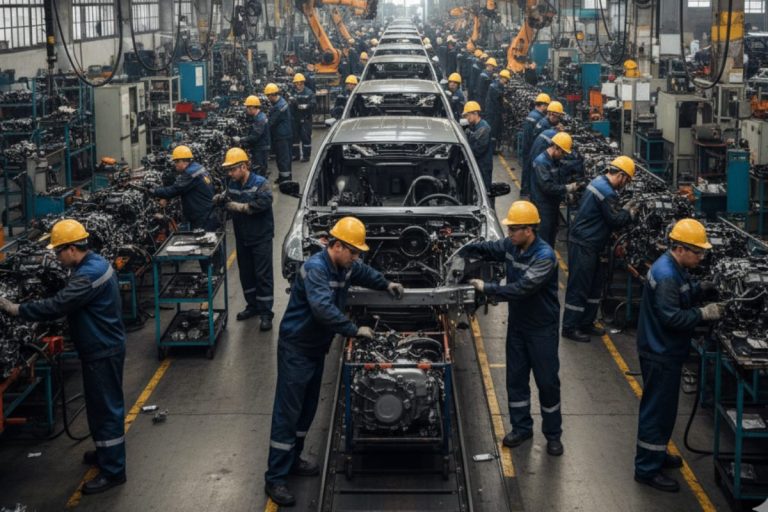
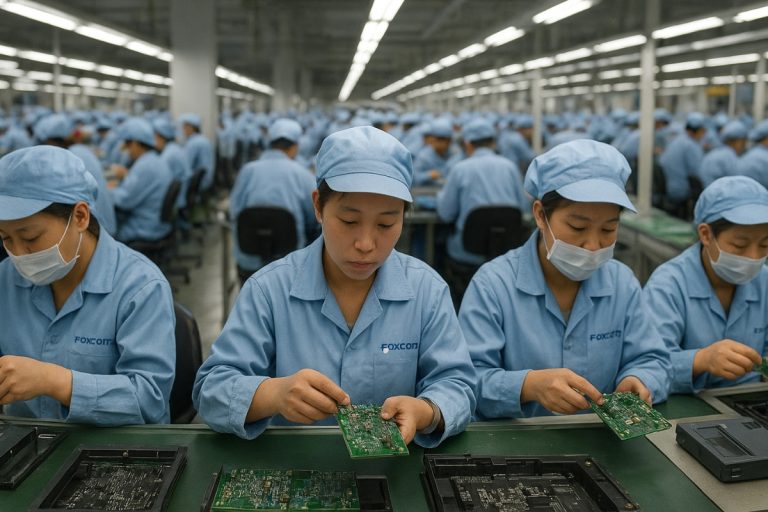
Yet behind the impressive commercial performance of Chinese container manufacturers is a workforce of tens of thousands of workers who make these containers. China’s competitive box prices are enabled not only by geographic advantage and product innovation, but by how little money is invested in ensuring safe factory facilities in an industry where production processes are inherently hazardous. Occupational injuries and diseases are widespread, most commonly dust-induced lung diseases, chemical poisoning and hearing loss.

This report will first outline how container production has become concentrated in China over the past 15 years, and introduce the largest container manufacturing companies. We will then consider the costs of container manufacturing – not in terms of dollars or Yuan, but in terms of the health and safety of Chinese production line workers. The report will conclude with accounts of workers who have acquired occupational injuries and diseases, and how employers have thwarted their diagnosis, treatment and compensation.


[1] Twenty-foot equivalent units or TEU is the standard unit of measurement for shipping container production.

Please Download Full Report here: Container Industry Report

If you are interested, please visit GM Publication

A Follow Up Investigation on Maersk Qingdao and Dongguan

2011 June 21
tags:
by Globalization Monitor

A Follow Up Investigation on Maersk Qingdao and Dongguan

Globalization Monitor

April 15, 2011

In January and May 2008, two riots, one after the other, broke out amongst workers at Maersk Container Industry’s plant in Dongguan, a southern China’s city. The workers were complaining about the poor working conditions and employment terms. We therefore conducted an investigation at Maersk Container Industry Dongguan (MCID), and released our first report in January 2009. At a meeting in March Maersk’s head office representative promised us the company would improve working conditions and labor rights violations in MCID. We conducted a second MCID investigation in August 2009 and then again throughout 2010. We found that although MCID has improved the way it treats its workers there are still lots of malpractices going on. We also investigated Maersk Container Industry Qingdao (MCIQ) – Qingdao is a northeast China city – we found that the plant management has allowed practices which are not in line with the law or which violate basic human rights.

Please download the full report here: Report On MCIQ and MCID (PDF)

More GM Publication

“No Choice but to Fight!”

2011 March 16
by Globalization Monitor

“No Choice but to Fight!”

— A documentation of battery women workers’ struggle

for health and dignity

“No Choice but to Fight!”

Globalization Monitor

From exploited victims of globalisation to well-organised campaigners for compensation and safe working conditions, the journey of these employees at a multinational company is nothing short of inspiring. It takes the reader through China’s official complaints system, the Bureau of Letters and Calls, to disciplined picket lines that briefly brought production at a major global battery factory to a halt.

It is a story of struggle, transformation and hope. Emerging from workshops thick with red clouds of poisonous cadmium oxide dust, come exhausted young women determined to change their fate and expose company disinformation on their deteriorating health. Despite official restrictions on organising and media access, these extraordinary workers demonstrate time and again the power of traditional trade union values: solidarity, determination and the importance of organised labour in protecting workers’ rights against a predatory system. At the end of the day, the Gold Peak workers’ story takes us back to basics. It is a timely reminder that ILO Conventions 87 and 98, on the rights to organise and to bargain collectively respectively, must be universally respected. I believe this book takes us a significant step closer to that goal.

President of the FNV (Netherlands Trade Union Confederation)
Agnes Jongerius

If you are interested, please click here to download our full report: 《No Choice but to fight》

For more information, Please check here.

Dongguan welder was crushed to death by containers, the face of the deceased deformed

2011 March 10
by Globalization Monitor

18 Feb, 2011

On the night of 16th February, 2011, there was an industrial accident occurred in Maersk Container Industry Dongguan (MCID). A welder accidentally fell down at work and then was crushed by container. He was dead immediately. The day after, Labor Bureau and Safety Department of Ma Chong Town started an investigation. The plant has been asked to stop production since then.

According to a factory worker, Mr. Liu, the dead worker called Chen, aged about 20 something years old. Liu was working with Chen at the welding optometry OK station of MCID. Chen was in class B who was on duty that night. At about 10:20 pm, Chen fell from 2 meter high container and was immediately crushed by the base of a container. He died on spot.

(From here, a short paragraph is not translated.)

A worker said, the production orders increased a lot after the Chinese New Year Holiday. In order to meet the lead time, it is possible that the operating speed and tempo were increased. This shows the management went wrong and that leads to the accident. After that, the management told us, “Something goes wrong, no need to go to work!” read more…

We Condemn Violence against Workers’ Representatives—An Open Letter by Gold Peak (GP) Battery Workers

2010 August 25
Since August 16th 2010, over a hundred GP ex-workers who suffered from excessive levels of Cadmium had started to negotiate with GP in Huizhou. However, GP ignored the workers’ demands and made no concessions.

August 24th 2010, over a hundred workers protested outside GP’s factory in Huizhou.  On the same day, at around 11: 30 pm, several workers representatives were surrounded and beaten up by about 300 mobs whose identities were unknown.  The injured workers include Zhang Xiaoqin, Tan Xiaoqiong, Xian Fang, Yu Shaolan, and Yang Xiaohong.  Yu Shaolan was seriously injured, so as Yu shaoian and Xian Fang, and they are all hospitalized at this moment. After the incident, GP refused to pay for the medical expenses. The workers had to raise fund among themselves in order to pay for the hospital bills.

In 2004, GP claimed that they would take the responsibility and signed an agreement with us (the workers who suffered from excessive levels of Cadmium), saying that they would take care of us until we fully recovered from the poisoning.  We then resigned from our jobs under this promise.

Since 2004, our workers’ health conditions had been deteriorating. Up till now, we already had 22 people got poisoned by excessive levels of Cadmium , and there were workers suspected to die from cadmium poisoning.  GP broke their promise and forced the workers to accept the so-called “20,000-RMB Agreement”, asking each of the affected workers to take the money and shut up. We refused to sign this unfair agreement, and what happened next was some of the workers’ representatives got violently beaten up.

Jet Power in Shenzhen and GP in Huizhou belong to the same company, which is Gold Peak Industrial Ltd. in Hong Kong. Workers form both factories suffered from excessive levels of Cadmium.  Jet Power in Shenzhen closed down recently, but the compensation offered to the affected workers by Jet Power was far better than us.  Each of them received about 15,000 RMB allowance in total, and an extra300 RMB each month as nutrition fee (until their body check becomes normal again). However, the workers in Huizhou never got the same treatment, and when we left the factory in 2004, we did not receive the same allowance. The actions we had been putting up these few days were aimed to fight for the same treatment for the workers in Huizhou by GP.

Who is behind the scene of this violence incident?

It is obvious that this violence incident was pre-arranged by somebody.  The most shocking thing is: who could recruit 300 mobs to beat up workers in 3 hours, and how did they know which ones were the workers’ representatives?  The mobs told us that they were paid 50 dollars a day to beat up the protesting workers.  Some workers even saw that there were two security guards bringing these mobs to beat us.

We feel extreme angry, and we strongly oppose the use of violence against protesting workers.  We think the government and GP did not take their responsibility to protect the workers, because the incident happened when the workers were negotiating with the factory, under the government’s coordination.  We strongly urge the government to immediately investigate this violence incident and to arrest the offenders and the people who arranged this incident.  Moreover, GP should compensate the injured workers and cover all related medical expenses.

We urge the society to support out reasonable demands and our fight for justice.

200 GP workers in Huizhou
25th August 2010

[New Publication by GM]: The Reform of the Urban Water Supply in Southern China

2010 June 15

This report aims to identify the problems of China’s current water supply sector reforms from a grassroots perspective and to present an overview of the issues casued by water privatization in Southern China.

Our world is facing a water crisis due to pollution, climate change and a surging population growth of such magnitude that close to two billion people now live in water-stressed regions.  China is not excluded from the impending water threats – she has almost one-quarter of the world’s population but only 6 per cent of its fresh water.  Industrialization and urbanization have raised the demand for water and the pollution level to new heights. When we talk about the water problems in China, however, people often think of the severe pollution problem, i.e. the water resources management problem. People seldom pay attention to another equally vital problem: water supply management. read more…

[New Publication by GM]: “European Companies Lobbying in China and Chinese Reponses”

2010 June 11
by water


“For labor unionists, activists, scholars and advocates who are outside of China — but deeply interested in what happens inside China — the process of going beneath the surface of things is very daunting. In the last three decades capitalists have made themselves at home in China and, along with international finance and trade envoys, political representatives and their allies within academia, think tanks, media and public relations, they have burrowed into Chinese government and business elites to powerfully advance their own interests. read more…