<?xml version="1.0" encoding="UTF-8"?>
<rss version="2.0"
	xmlns:content="http://purl.org/rss/1.0/modules/content/"
	xmlns:wfw="http://wellformedweb.org/CommentAPI/"
	xmlns:dc="http://purl.org/dc/elements/1.1/"
	xmlns:atom="http://www.w3.org/2005/Atom"
	>

<channel>
	<title>Globalization Monitor</title>
	<atom:link href="http://www.globalmon.org.hk/en/feed/" rel="self" type="application/rss+xml" />
	<link>http://www.globalmon.org.hk/en</link>
	<description>People Before Profit</description>
	<pubDate>Wed, 24 Feb 2010 06:24:49 +0000</pubDate>
	<generator>http://wordpress.org/?v=2.6.5</generator>
	<language>en</language>
			<item>
		<title>Investigation and Monitoring of the Post-MFA Impact in China</title>
		<link>http://www.globalmon.org.hk/en/106wto-globalization/investigation-and-monitoring-of-the-post-mfa-impact-in-china/</link>
		<comments>http://www.globalmon.org.hk/en/106wto-globalization/investigation-and-monitoring-of-the-post-mfa-impact-in-china/#comments</comments>
		<pubDate>Wed, 24 Feb 2010 06:19:11 +0000</pubDate>
		<dc:creator>Globalization Monitor</dc:creator>
		
		<category><![CDATA[WTO &amp; Globalization]]></category>

		<category><![CDATA[China]]></category>

		<category><![CDATA[garment]]></category>

		<category><![CDATA[MFA]]></category>

		<category><![CDATA[Multi-Fibre Arrangement]]></category>

		<category><![CDATA[textile]]></category>

		<guid isPermaLink="false">http://www.globalmon.org.hk/en/?p=885</guid>
		<description><![CDATA[31 December 2004 marks the end of the Multi-Fibre Arrangement (MFA), a thirty-year old quota system for textile and garment exports from developing countries to developed countries. The common speculations prior to the MFA expiration have been that soaring Chinese and Indian exports, declining trade for smaller countries such as Bangladesh, Sri Lanka, cheaper prices [...]]]></description>
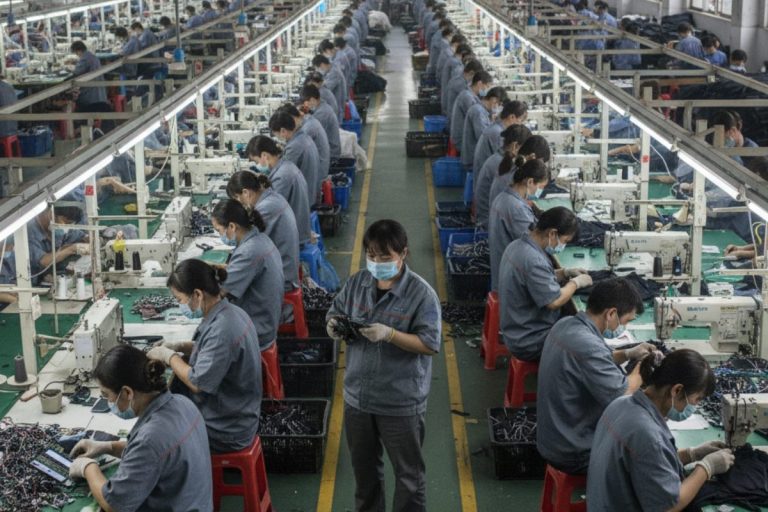
			<content:encoded><![CDATA[<p>31 December 2004 marks the end of the Multi-Fibre Arrangement (MFA), a thirty-year old quota system for textile and garment exports from developing countries to developed countries. The common speculations prior to the MFA expiration have been that soaring Chinese and Indian exports, declining trade for smaller countries such as Bangladesh, Sri Lanka, cheaper prices for consumers in the developed countries, further job loss of textile and garment workers in the developed countries.</p>
<p>This research aims to analyse, shortly before the fifth anniversary of the Post-MFA era, what have been “accomplished” and how many of the speculations have become reality. It would look into the following aspects: 1) the reality of outputs, trade and productivity growth, as well as the number of enterprises of China&#8217;s textile and garment industry; 2) the employment trend and the Post-MFA era&#8217;s influence on the livelihood of the millions Chinese workers who are employed in the textile and garment industry, if any measures, have been taken by the government, factory owners, foreign buyers or workers themselves, to ensure them a decent work environment and living, or if the appalling labour conditions, which is commonly found in the textile and garment industry continue to prevail; 3) how the textile and garment industry in China weathers the stormy global financial crisis and its priorities.</p>
<p><a href="http://www.globalmon.org.hk/en/wp-content/uploads/2010/02/postmfa_finalen19022010.pdf">Download the full report</a> (494KB, PDF)</p>
]]></content:encoded>
			<wfw:commentRss>http://www.globalmon.org.hk/en/106wto-globalization/investigation-and-monitoring-of-the-post-mfa-impact-in-china/feed/</wfw:commentRss>
		</item>
		<item>
		<title>An open secret: Chinese manufacturers use toxic cadmium in jewelry despite health risks</title>
		<link>http://www.globalmon.org.hk/en/01news/021gp-battries-cadmium/03other-battery-poisoning/an-open-secret-chinese-manufacturers-use-toxic-cadmium-in-jewelry-despite-health-risks/</link>
		<comments>http://www.globalmon.org.hk/en/01news/021gp-battries-cadmium/03other-battery-poisoning/an-open-secret-chinese-manufacturers-use-toxic-cadmium-in-jewelry-despite-health-risks/#comments</comments>
		<pubDate>Wed, 13 Jan 2010 06:18:26 +0000</pubDate>
		<dc:creator>Globalization Monitor</dc:creator>
		
		<category><![CDATA[Other battery poisoning]]></category>

		<category><![CDATA[cadmium poisoning]]></category>

		<category><![CDATA[jewelry]]></category>

		<category><![CDATA[WalMart]]></category>

		<guid isPermaLink="false">http://www.globalmon.org.hk/en/?p=878</guid>
		<description><![CDATA[ALEXA OLESEN, EUGENE HOSHIKO
Associated Press Writers
January 12, 2010
YIWU, China (AP) — For China&#8217;s low-cost jewelry makers, it was an open trade secret: The metal cadmium is shiny, strong and malleable at low temperatures, regardless of its health hazards. And it&#8217;s cheap.

Despite the risks, manufacturers in factories ringing this city on China&#8217;s east coast say their [...]]]></description>
			<content:encoded><![CDATA[<p>ALEXA OLESEN, EUGENE HOSHIKO<br />
Associated Press Writers<br />
<a href="http://www.latimes.com/news/nationworld/nation/wire/sns-ap-cadmium-jewelry-factories,0,6097498,full.story" target="_blank">January 12, 2010</a></p>
<p>YIWU, China (AP) — For China&#8217;s low-cost jewelry makers, it was an open trade secret: The metal cadmium is shiny, strong and malleable at low temperatures, regardless of its health hazards. And it&#8217;s cheap.<br />
<span id="more-878"></span><br />
Despite the risks, manufacturers in factories ringing this city on China&#8217;s east coast say their top priority is profit. So offering cut-rate goods often means using lower quality materials, including cadmium, which is known to cause cancer.</p>
<p>&#8220;Business is business, and it&#8217;s all up to our client,&#8221; said He Huihua, manager of the Suiyuan Jewelry Shop at International Trade City in Yiwu, a sprawling wholesale mecca where sellers pitch their wares in hopes of landing a lucrative export contract.</p>
<p>He spoke from a small cubicle with rows of dangling metal earrings and key chains hanging on the wall. Elsewhere, brooches, necklaces, charms and other baubles shone under the market&#8217;s lights.</p>
<p>&#8220;We just make what our clients order. If they pay more, we use the better raw material, and vice-versa. From a few cents to a few dollars, we can make the same style of jewelry product with a different raw material.&#8221;</p>
<p>Asked what he thought about the health risks associated with cadmium and other toxic metals, He said: &#8220;I can&#8217;t be overly concerned about that.&#8221;</p>
<p>Long-standing concerns about the safety of Chinese exports flared anew this week after an investigation by The Associated Press found that 12 of 103 pieces of mainly Chinese-made children&#8217;s jewelry bought in the Unites States contained at least 10 percent cadmium, some in the 80-90 percent range. Two had less than 10 percent and the rest had none.</p>
<p>The findings prompted retail giant Wal-Mart Stores Inc. to remove the products cited by AP from its stores in the United States. On Tuesday, the jewelry and accessories chain Claire&#8217;s, with nearly 3,000 locations in North America and Europe, announced that it, too, would stop selling any item cited in the AP investigation.</p>
<p>Charms on a &#8220;Best Friends&#8221; bracelet sold at Claire&#8217;s contained 89 and 91 percent cadmium, according to testing organized by AP, and shed alarming amounts in a procedure that examined how much cadmium children might be exposed to.</p>
<p>The U.S. Consumer Product Safety Commission announced it was opening an investigation into the AP&#8217;s findings, and China&#8217;s government also took notice of the trouble brewing in its largest export market.</p>
<p>&#8220;We just heard about this, and we will investigate,&#8221; said Wang Xin, director of supervision in the General Administration of Quality Supervision, Inspection and Quarantine.</p>
<p>He spoke to an AP reporter at a toy safety conference in Hong Kong. His agency and the Ministry of Commerce did not immediately respond to written questions submitted by fax in Beijing.</p>
<p>The tainted jewelry was reminiscent of the product-safety scandals of 2007 in which dangerous levels of lead caused Mattel Inc. and other toy makers to recall large numbers of Chinese-made toys. Following that, the U.S. government enacted tougher limits on lead in toys.</p>
<p>Beijing also promised greater vigilance in enforcing safety standards for exports and the domestic market.</p>
<p>China has regulations limiting cadmium to tiny amounts in fashion jewelry and children&#8217;s toys. Fashion jewelry should not contain more than 0.1 percent cadmium. In materials for toys, cadmium should not exceed 75 parts per million, or 50 parts per million for clay and paint.</p>
<p>The limits are comparable with international standards. But enforcement is still lax, as it was in 2007.</p>
<p>A metals expert in a Yiwu jewelry factory said some raw-material suppliers sell an alloy containing up to 90 percent cadmium.</p>
<p>Interviews with more than a dozen manufacturers and sellers in Yiwu confirm that cadmium is a common ingredient in the earrings, bracelets, charms and other baubles being churned out by local factories and piled high in that city&#8217;s wholesale markets.</p>
<p>Yiwu, once a small county town five hours south of Shanghai, has boomed in the past 20 years. It now dominates China&#8217;s low- to mid-range jewelry market, while premium products using gold and real gems tend to be made down south in the Pearl River Delta, near Hong Kong.</p>
<p>In all, China shipped about 1.3 million pounds (595,000 kilograms) of jewelry abroad in 2008 — a 15 percent decrease from the previous year, according to the Hong Kong-based consulting firm Global Sources.</p>
<p>Tao Xinyao, a metals expert who works in the Yiwu factory for jewelry maker Neoglory, said she noticed an uptick in the use of cadmium around 2003, when prices of the metal hit a low. Jewelry makers discovered they could work with cadmium at much lower temperatures than they could zinc, the most common nontoxic material, she said.</p>
<p>The lower melting point for cadmium — around 300 degrees Celsius compared to 400 degrees for zinc — means factories use less energy and do not need to change their silicon rubber molds as often, Tao said. Because cadmium is lighter than zinc, buyers also get more per ton when they buy an alloy.</p>
<p>&#8220;In the Yiwu market, some material suppliers sell so-called &#8216;zinc alloys,&#8217;&#8221; Tao said. &#8220;However, this may contain just a very small amount of zinc, and 80 to 90 percent cadmium. It actually should be called cadmium alloy.&#8221;</p>
<p>Lead and cadmium are commonly found in metal jewelry sold in China simply because it&#8217;s cheaper. A ton of high-quality zinc costs about 28,000 yuan ($4,100) while zinc with lead, cadmium or both in it sells for about 16,000 yuan ($2,350), said Frank Zhang, an executive with a jewelry factory in Yiwu that specializes in high-end exports but who did not want his Chinese or company names used.</p>
<p>Industry executives said most of the low-end goods with high amounts of cadmium are sold in China and increasingly sent to Dubai and other markets in the Middle East with less stringent import controls than the U.S. or Europe.</p>
<p>Cutting corners and trimming costs have become even more critical to Chinese manufacturers since the financial crisis sent purchase orders plummeting. Global Sources said about 10 percent of China&#8217;s jewelry plants were forced to shut down in 2008 due to the financial crisis.</p>
<p>Sales representative Toby Zhu said his company, a jewelry factory in Yiwu that turns out faux diamonds and jade strung on gold-plated chains, is among those feeling the pinch.</p>
<p>Over the last year, Zhu&#8217;s factory closed its showroom at the trade mall, laid off seven of its 100 workers and gave deep discounts to loyal customers in an attempt to weather the financial crisis. They are also using a cheaper grade of zinc than before, but Zhu denied switching to a cadmium alloy. He said their zinc alloys were mid-range in price and contained safe metals such as copper, magnesium or steel.</p>
<p>Zhu, who did not want his Chinese or company&#8217;s name used, said lead was even better than cadmium or zinc for tiny charms. Since the U.S. adopted more restrictions on lead, he said, many overseas clients have come to demand lead-free products, probably prompting many manufacturers to turn to cadmium.</p>
<p>Making sure Chinese-made goods are safe requires constant vigilance — something many foreign companies fail to do, said Christopher Devereux, managing director of the Guangzhou-based consulting firm Chinasavvy HK Ltd. China traders like Devereux call it &#8220;quality fade&#8221; — a phenomenon in China in which suppliers constantly try to produce goods more cheaply with lower-quality materials.</p>
<p>&#8220;In any other country in the West, your quality curve goes upwards, but it&#8217;s the opposite in China. We just have learned our lesson. We need to check every single batch,&#8221; said Devereux who helps Western companies buy and produce a variety of goods in China, from toys and plumbing fixtures to shoes and lunch boxes.</p>
<p>&#8220;Cadmium is one of the nastiest of the heavy metals, worse than lead. I was absolutely amazed that people were using it,&#8221; he said.</p>
<p>Chen Zaiying, manager of the Yiwu SK Jewelry shop in the International Trade City, echoed Devereux&#8217;s comment, saying many Chinese manufacturers combine hazardous batches with others that comply with regulations in the destination market.</p>
<p>&#8220;The buyer should not rely only on the inspection report offered by the producer,&#8221; Chen said. &#8220;They should have the sense to do their own inspection as well if they really want the product to meet the export standard.&#8221;</p>
<p>___</p>
<p>Olesen reported from Beijing. Associated Press writers William Foreman in Guangzhou and Jeremiah Marquez in Hong Kong, and AP researchers Xi Yue in Beijing and Ji Chen in Yiwu contributed to this report.</p>
]]></content:encoded>
			<wfw:commentRss>http://www.globalmon.org.hk/en/01news/021gp-battries-cadmium/03other-battery-poisoning/an-open-secret-chinese-manufacturers-use-toxic-cadmium-in-jewelry-despite-health-risks/feed/</wfw:commentRss>
		</item>
		<item>
		<title>Cadmium</title>
		<link>http://www.globalmon.org.hk/en/01news/021gp-battries-cadmium/03other-battery-poisoning/cadmium/</link>
		<comments>http://www.globalmon.org.hk/en/01news/021gp-battries-cadmium/03other-battery-poisoning/cadmium/#comments</comments>
		<pubDate>Wed, 13 Jan 2010 06:00:26 +0000</pubDate>
		<dc:creator>Globalization Monitor</dc:creator>
		
		<category><![CDATA[Other battery poisoning]]></category>

		<category><![CDATA[cadmium poisoning]]></category>

		<guid isPermaLink="false">http://www.globalmon.org.hk/en/?p=880</guid>
		<description><![CDATA[Cadmium (Cd), is a silvery white coloured heavy metal. Resistant to corrosion and abrasion, it is a common carcinogenic chemical with a soft texture that is extremely elastic. It is non-degradable and therefore poses an environmental hazard when discarded as industrial waste. The International Agency for Research on Cancer (IARC) classifies cadmium and its compounds [...]]]></description>
			<content:encoded><![CDATA[<p>Cadmium (Cd), is a silvery white coloured heavy metal. Resistant to corrosion and abrasion, it is a common carcinogenic chemical with a soft texture that is extremely elastic. It is non-degradable and therefore poses an environmental hazard when discarded as industrial waste. The International Agency for Research on Cancer (IARC) classifies cadmium and its compounds as Group 1 of carcinogen for humans.[1] When inhaled, cadmium is eliminated from the human body via urine. However, the amount of cadmium excreted daily in this manner is very small. It represents only about 0.005 – 0.01% of the total body burden which corresponds to a biological half-life for cadmium of about 20-40 years.[2] Consequently cadmium causes long-term damage to many organs and tissues, especially the kidneys and skeletal structure. In Japan cadmium related diseases were called Itai-itai disease, with ‘itai’ means ‘painful’. The severe bone pains induced by cadmium poisoning caused such distress that victims would cry out “Pain! Pain!”<span id="more-880"></span></p>
<p>In July 2006, concerns about the toxicity of cadmium led the European Union (EU) to ban the production of electrical appliances and electrical goods that contain cadmium along with the import of nickel cadmium batteries.[3]</p>
<p>Cadmium oxide, which is red in colour, is chiefly used in the manufacturing of nickel cadmium batteries, whose chief application is making negative electrodes to transmit electric current.</p>
<p>In 2004 China produced half of the world’s batteries, 80 percent of which were for export.[4] This was the result of the relocation of the industry - along with many other industries - to China from the rest of the world. In that year China exported 800 million nickel cadmium batteries, a rise of 67 percent over the 1999 level. China has thus also become greatest consumer of cadmium as well: in 2004 China consumed half of the world’s cadmium production, 70 to 80 percent of which was destined for nickel cadmium batteries.[5]</p>
<p>We Are All Connected<br />
&#8211;Environmental Degradation by Cadmium</p>
<p>In December 2003 The Gold Peak Batteries claimed in its internal bulletin Sylva Express that “the management always pays extra attention to industry safety. And the Industry Safety and Environmental Protection Committees was respectively established in the Hong Kong headquarters and its subsidiaries in Mainland China. These committees are devoted to promoting workers’ consciousness of industry safety, improving designs of machines and providing workers with a safe working condition.”[6]</p>
<p>A report published in Mingpao, a Hong Kong daily, on July 4, 2004, half a year after Sylva Express’ boastful claim, deeply embarrassed the company. The report’s title was “Local Villagers Suffers the Disaster of Cadmium Oxide Pollution from GP Battery Factory”:</p>
<p>“The incident of cadmium poisoning in the Hong Kong-invested factory tends to overspread. Yesterday, many villagers nearby the factory reported that they were tested with excessive levels of urinary cadmium. It means that besides employees of the factory, the local villagers also became victims. Now, the villagers and households nearby were quite nervous. Many of them dare not drink tap water. By far, Huizhou municipality doesn’t take any step to handle the situation.”</p>
<p>“Huizhou Power Pack is situated at Dashulin Village, Xiaojinkou Town, Huizhou city. There are about 3,000 villagers and migrants. A motorcycle driver whose family name was Zhu told the reporter that last week he went to the battery factory to ask for a job. He was found with minor excessive cadmium level. Mr. Zhu was confused. He wondered why he, too, had excessive cadmium, since he wasn’t an employee of the factory before. Then he learnt that many villagers had the same problem.”</p>
<p>A nearby kindergarten was so afraid of possible cadmium poisoning that it moved away as soon as possible.</p>
<p>On July 22 Green Peace sent a team to investigate the community around the Advance Battery. Mingpao reported on its finding on October 4:</p>
<p>“The sewage, the sediments in sewage and dust samples outside the Advance Battery all contain high concentrated heavy metal cadmium, which can cause cancer. The level of cadmium in sewage is more than 19 times the permitted level both in Hong Kong and Mainland China. The possibility that the battery factory might have caused the pollution cannot be excluded. (Green Peace) demanded the factory provide an explanation. Cadmium in sediments and dust was 100 to 7000 times the permitted level.”</p>
<p>The following day the Gold Peak Industrial (holding) Ltd. issued a statement, declaring “the Environmental Protection Bureau of the Huizhou government has been carrying out periodic checks and inspection on the factory’s facilities, including the cadmium level of the industrial waste water. Our industrial wastewater treatment system and discharge have been certified as compliant with the relevant standards. ”</p>
<p>What the GP statement left out was domestic sewage from the factories. We obtained the November 8, 2004 minutes of a joint meeting between the management of Power Pack and a representative from the Hong Kong Productivity Council. According to the minutes, “Power Pack discharged its domestic sewage without any treatment; for instance, laundry wastewater is directly discharged into rivers and lakes.” Let us not forget that the uniforms worn by workers were full of cadmium dust, and laundry wastewater probably contained a considerably high level of cadmium as well.</p>
<p>The Gold Peak case is by no means an isolated incident. The New Sci-Tech District in Wuxi, which houses many Japanese factories, including WMB, reported that since its founding, local people noticed the extinction of birds in the neighborhood. They also reported that the surrounding river turns black.</p>
<p>An unanimous article was posted on the well known website Tianya, reporting an inside story about battery producers:</p>
<p>“Once I had a private conversation with an engineer of a top nickel-cadmium battery manufacturer, discussing how they treat the cadmium oxide wastewater. He mused for a moment and said, ‘no manufacturer will spend too much money in treating wastewater. Most times we just do it half-heartedly. The local government simply turns a blind eye to this because we are one of the biggest taxpayers. Sometimes, wastewater is directly discharged without any treatment at all. By and large, the soils around the factory were polluted.’ If even the top battery producer behaves like this, then what would those lesser producers do? I cannot help feel sorry for Huai River. Despite billions of yuan having been pumped into the project of treating pollution in Huai River, the pollution is getting more and more serious.”[7]</p>
<p>Pollution is not limited to the Huai River. The whole Pearl River Delta has been polluted by heavy metals, including cadmium. According to the investigation into the soil conducted by State Environmental Protection Administration of China, four-tenths of the farms and vegetable plots in the Pearl River Delta have been polluted by heavy metals. For example, in Zhongshan City, the concentration of cadmium, nickel and copper in vegetable plots were 50%, 43% and 10.9% above the permitted level respectively. A random sampling of vegetables by the Zhongshan Center for Disease Control and Prevention found that they carried cadmium that was 9.9 percent over the permitted level.[8] These vegetables are transported to cities throughout the Delta. Earlier, the Consumer Council in Zhongshan noticed that the cadmium exceeded the permitted level in five aquatic products including freshwater clams, scallop, oyster, clam and cuttlefish. The volume of cadmium in scallops is 33 times over the permitted level.[9]</p>
<p>China may not be the worst country in the lax enforcement of laws on occupational safety and environmental protection in the world. The fact that China consumes half of the world production of cadmium and its combination with lax enforcement of laws implies the gigantic scale of the cadmium pandemic which no other countries can compare, though.</p>
<p>But the cadmium pandemic, a result of the shifting of battery production to China, does not only affect the Chinese people. The legacy of the cadmium battery industry is that it contaminates even after the factory is shut down, as the Wall Street Journal reported:</p>
<p>“The near-disappearance of the American cadmium-battery industry can be understood from a visit to an overgrown field in Cold Spring, N.Y. Here, the Marathon Battery factory churned out nickel-cadmium batteries for the U.S. military for three decades. After the plant was shuttered in 1979, the cadmium-laden ground became one of the nation&#8217;s highest-profile superfund sites, sparking a $130 million clean-up and a class-action lawsuit by nearby residents that was settled for millions of dollars in 1998.”[10]</p>
<p>Moreover, cadmium travels around the world in the form of consumer goods, especially toys. In the United States this has resulted in recalls of a number of metallic toy jewelry items by the Consumer Product Safety Commission. In 2006 high level of nickel, cadmium, copper and zinc was found in a bracelet exported by China which was hazardous to children’s health.[11]</p>
<p>A month after the Wall Street Journal reported on GP case the same Journal reported that</p>
<p>“TOYS &#8216;R&#8217; US Inc. said it will begin phasing out nickel-cadmium batteries, the making of which has caused widespread environmental contamination in China and poisoned hundreds of factory workers.</p>
<p>Most of the new safety initiatives aim to protect the health of the consumers. The cadmium-battery phase-out is a sign that toy retailers are also under pressure to consider the health of the workers and citizens of China, where the majority of the world&#8217;s toys are made.</p>
<p>Some toy makers, including Hasbro Inc., have already launched their own bans on cadmium batteries.”[12]</p>
<p>It is obvious that neither the shifting of cadmium battery production from the West to China, nor the 2006 banning of electrical appliances which contain cadmium in EU, nor the action of TOYS &#8216;R&#8217; US Inc. to phase out nickel-cadmium batteries, is enough to keep those countries safe from cadmium contamination. It is going to haunt workers, consumers and the general public for a long time to come if we do not do something about the cadmium pandemic in China. It is time for us to campaign for extending the EU ban on cadmium products to China and the rest of the world.</p>
]]></content:encoded>
			<wfw:commentRss>http://www.globalmon.org.hk/en/01news/021gp-battries-cadmium/03other-battery-poisoning/cadmium/feed/</wfw:commentRss>
		</item>
		<item>
		<title>Xiagang</title>
		<link>http://www.globalmon.org.hk/en/01news/xiagang/</link>
		<comments>http://www.globalmon.org.hk/en/01news/xiagang/#comments</comments>
		<pubDate>Tue, 12 Jan 2010 08:36:59 +0000</pubDate>
		<dc:creator>Globalization Monitor</dc:creator>
		
		<category><![CDATA[China Labour]]></category>

		<category><![CDATA[Xiagang]]></category>

		<guid isPermaLink="false">http://www.globalmon.org.hk/en/?p=874</guid>
		<description><![CDATA[
The Sacrifice in the Transformation of Labour Policy in China
From State to Market
Asia Monitor Resource Centre
It is a collection of essays on the exploration of the issue of layoff in state-run enterprises in China. Most articles are related to the studies commissioned by Asia Monitor Resource Centre (AMRC) in late 1990’s. It reveals the fact [...]]]></description>
			<content:encoded><![CDATA[<div id="attachment_875" class="wp-caption alignright" style="width: 160px"><img class="size-thumbnail wp-image-875" title="Xiagang" src="http://www.globalmon.org.hk/en/wp-content/uploads/2010/01/xiagang-bookcover-150x150.jpg" alt="Xiagang" width="150" height="150" /><p class="wp-caption-text">Xiagang</p></div>
<p>The Sacrifice in the Transformation of Labour Policy in China<br />
From State to Market</p>
<p>Asia Monitor Resource Centre</p>
<p>It is a collection of essays on the exploration of the issue of layoff in state-run enterprises in China. Most articles are related to the studies commissioned by Asia Monitor Resource Centre (AMRC) in late 1990’s. It reveals the fact of<br />
Xiangang workers that has been veiled in the mainstream media. Certainly, it is a book indispensable for anyone who is interested in labour issue or shows concern for the livelihood of Xiagang workers in China.</p>
<p>*Some articles are written in Chinese</p>
<p>Edition : Dec 2009 / Paper Back<br />
Price : HKD 100<br />
Contact : <a href="mailto:admin@amrc.org.hk" target="_blank">admin@amrc.org.hk</a></p>
]]></content:encoded>
			<wfw:commentRss>http://www.globalmon.org.hk/en/01news/xiagang/feed/</wfw:commentRss>
		</item>
		<item>
		<title>Gold Peak Group Must Reinstate Wang Fengping And Support Calls for the Release of the Three Detained Workers in Huizhou</title>
		<link>http://www.globalmon.org.hk/en/01news/021gp-battries-cadmium/869/</link>
		<comments>http://www.globalmon.org.hk/en/01news/021gp-battries-cadmium/869/#comments</comments>
		<pubDate>Mon, 11 Jan 2010 08:40:19 +0000</pubDate>
		<dc:creator>Globalization Monitor</dc:creator>
		
		<category><![CDATA[Appeal from Local Organisations]]></category>

		<category><![CDATA[China Labour]]></category>

		<category><![CDATA[GP Batteries cadmium posining case]]></category>

		<category><![CDATA[Gold Peak]]></category>

		<category><![CDATA[GoldPeak]]></category>

		<category><![CDATA[GP]]></category>

		<guid isPermaLink="false">http://www.globalmon.org.hk/en/?p=869</guid>
		<description><![CDATA[Open Letter to Mr. Victor Lo, CEO of GP
To Mr.Victor Lo
Gold Peak Industries (Holdings) Co., Ltd.
Kwai Wing Road, Kwai Chung,
New Territories,
Hong Kong,
Mr Victor Lo,
Today, 30 December 2009, your Huizhou-based subsidiary Huizhou Power Pack Co. Ltd dismissed Wang Fengping for her alleged leading role in a street meeting on 9 December. Wang Fengping’s dismissal follows the [...]]]></description>
			<content:encoded><![CDATA[<p>Open Letter to Mr. Victor Lo, CEO of GP</p>
<p>To Mr.Victor Lo<br />
Gold Peak Industries (Holdings) Co., Ltd.<br />
Kwai Wing Road, Kwai Chung,<br />
New Territories,<br />
Hong Kong,</p>
<p>Mr Victor Lo,</p>
<p>Today, 30 December 2009, your Huizhou-based subsidiary Huizhou Power Pack Co. Ltd dismissed Wang Fengping for her alleged leading role in a street meeting on 9 December. Wang Fengping’s dismissal follows the earlier detention of four of your employees, including Ms. Wang, by the local authorities for their alleged inciting of fellow workers to block a main road in protest at conditions at your factory.<span id="more-869"></span></p>
<p>On 22 December 2009, four employees of the Huizhou Power Pack Co. Ltd were summoned to the Xiaojinkou Township police station to assist in an investigation into the road-blocking incident. The four included two women and two men: Wang Fengping, Chen Hongxia Chen Yinxin, and an unidentified colleague. Police accused them of inciting the workers to block the road and announced that they would be detained for ten days as punishment. All four denied the accusation and refused to sign the warrant on the grounds that the charges were groundless. At approximately six o’clock the same evening the police forcibly transported the workers to a detention centre. Despite suffering from a kidney disease that she believes was caused by having to work with cadmium while working at your company, Wang Fengping was refused permission to go to the toilet and had no choice but to urinate in the police vehicle. Police later released her on account of her medical condition. At the time of writing, the three other workers remain in detention.</p>
<p>From December 8 to 10, approximately 1,000 workers from the Huizhou Power Pack Co. Ltd took strike action. During this protest a nearby main road was briefly blocked. Your company has exploitation of these workers led to their desperate actions, hence you bear the moral responsibility for the detention of the four employees (for details of the background of these actions, please refer to our open letter to you on December 14 letter).</p>
<p>Furthermore, we consider the right of assembly a basic constitutional right and should not be an occasion for the detention of your employees. Far from allowing your subsidiary to act as an accomplice in the detention, we call on you and Gold Peak to assist in the immediate release of the three workers still in detention and to reinstate Wang Fengping.</p>
<p>Meanwhile, in our previous open letter to your company, we asked you to begin immediate negotiations with workers’ representatives on the basis of transparency and equality. To date, neither you, nor your company, have responded to this letter. This is hardly in keeping with the conduct expected of a publicly-listed company.</p>
<p>In the spirit of openness and good faith, we put the following demands to Gold Peak:</p>
<ol>
<li>Immediate reinstatement of Wang Fengping;</li>
<li>Negotiate with the Xiaojinkou police station to arrange for an immediate and unconditional release of the unjustly detained workers; and that your company pay these four workers normal wages during their period of detention;</li>
<li>Issue a public statement explaining your position on the incident;</li>
<li>Immediately initiate negotiation with all employees or their representatives in good faith to resolve disputes over wages and benefits;</li>
<li>Review Power Pack’s policy of paying workers just 33 yuan per day and issue guarantees on lawful, work-related benefits;</li>
<li>Launch a public, transparent inquiry on beating of one of your employees by security guards injured one of the workers that sparked the strike in December. Pending the result of this investigation, disciplinary action should be taken against the perpetrators of violence and an apology issued to the worker;</li>
<li>Meet your moral responsibility to cover the medical costs of the worker hospitalised as a result of the attack. This incident is a direct result of management practices at your factory in Huizhou.</li>
</ol>
<p>Globalization Monitor Ltd.<br />
Asia Monitor Resource Centre<br />
Justice and Peace Commission of the Hong Kong Catholic Diocese</p>
<p>December 31, 2009</p>
]]></content:encoded>
			<wfw:commentRss>http://www.globalmon.org.hk/en/01news/021gp-battries-cadmium/869/feed/</wfw:commentRss>
		</item>
		<item>
		<title>Our update on Gold Peak case</title>
		<link>http://www.globalmon.org.hk/en/01news/021gp-battries-cadmium/our-update-on-gold-peak-case/</link>
		<comments>http://www.globalmon.org.hk/en/01news/021gp-battries-cadmium/our-update-on-gold-peak-case/#comments</comments>
		<pubDate>Tue, 15 Dec 2009 10:11:37 +0000</pubDate>
		<dc:creator>Globalization Monitor</dc:creator>
		
		<category><![CDATA[China Labour]]></category>

		<category><![CDATA[GP Batteries cadmium posining case]]></category>

		<guid isPermaLink="false">http://www.globalmon.org.hk/en/?p=862</guid>
		<description><![CDATA[Globalization Monitor is continuing to monitor the situation at the Gold peak production sites.
In April 2009, Gold Peak made public its decision to move the JetPower plant in Shenzhen to Huizhou. This move will be effectuated by the end of 2009. Clearly, Gold Peak is making use of a loophole in the law that stipulates [...]]]></description>
			<content:encoded><![CDATA[<p>Globalization Monitor is continuing to monitor the situation at the Gold peak production sites.<br />
In April 2009, Gold Peak made public its decision to move the JetPower plant in Shenzhen to Huizhou. This move will be effectuated by the end of 2009. Clearly, Gold Peak is making use of a loophole in the law that stipulates that a company is not obliged to pay compensation for its ex-workers.<br />
<span id="more-862"></span><br />
In the past one year (Oct 08 – Oct 09), 19 GP workers with cadmium-related health problems have filed law suits against GP. Some have won and some have lost their cases. Eight workers won their court cases and got back more than 90,000 Yuan as compensation.  Gold Peak insists that all workers have to go through court procedures before being entitled to compensation and worker need to spend a lot of time and energy to resolve their problems through the court. Outside the court, workers got around 150,000 Yuan successfully as compensation and reimbursement in the past one year. </p>
<p>In mid-August, workers with excessive levels of cadmium, supported by Globalization Monitor, filed a petition at the Ministry of Health, arguing that the official standard for diagnosing cadmium poisoning is too strict and the period allowed for tracking its impact is too short. These workers have all undergone medical tests that confirm excessively high levels of cadmium in their urine, however, they were not formally diagnosed with cadmium poisoning, and as a consequence they are not entitled to compensation. So far, the Ministry has not yet responded to the petition.</p>
<p>Globalization Monitor is continuing to put efforts in making contact with GP battery workers and ex-workers with excessive levels of cadmium who are still fighting for their rights. Globalization Monitor is strongly focused on making workers aware of their rights. Liaising with workers takes a lot of trust building and is not achieved overnight. A first core of informed workers set up a strong mutual aid network which can then serve as focal point for their fellow workers. </p>
<p>Further to monitoring the Gold Peak case, Globalization Monitor is now taking an industry-view to monitor the trend of the industry. New batteries are taken into production, including Lithium-Ion, Lead-Acid and Nickel-Hydride batteries which are for high-tech products such as environmental friendly and energy saving vehicles and computer products. Some of these types of batteries may not contain cadmium; but it does not mean that health risk would  be excluded. Globalization Monitor is particularly concerned about the occupational health and safety risks of workers producing such batteries and will continue to monitor the working conditions in these new areas closely.</p>
]]></content:encoded>
			<wfw:commentRss>http://www.globalmon.org.hk/en/01news/021gp-battries-cadmium/our-update-on-gold-peak-case/feed/</wfw:commentRss>
		</item>
		<item>
		<title>Open letter to Gold Peak Industrial Holding Ltd.</title>
		<link>http://www.globalmon.org.hk/en/01news/021gp-battries-cadmium/open-letter-to-gold-peak-industrial-holding-ltd/</link>
		<comments>http://www.globalmon.org.hk/en/01news/021gp-battries-cadmium/open-letter-to-gold-peak-industrial-holding-ltd/#comments</comments>
		<pubDate>Fri, 11 Dec 2009 05:30:10 +0000</pubDate>
		<dc:creator>Globalization Monitor</dc:creator>
		
		<category><![CDATA[China Labour]]></category>

		<category><![CDATA[GP Batteries cadmium posining case]]></category>

		<guid isPermaLink="false">http://www.globalmon.org.hk/en/?p=858</guid>
		<description><![CDATA[December 10th, 2009
Mr. Victor Lo Chung Wing,
Chairman &#38; CEO
Gold Peak Industries (Holdings) Limited
From December 8 to 10, 2009, one thousand workers from Power Pack, your company in Huizhou, took strike action.
On December 9, frustration at the lack of response from management led to an escalation and hundreds of angry workers first blocked the gate of [...]]]></description>
			<content:encoded><![CDATA[<p>December 10th, 2009</p>
<p>Mr. Victor Lo Chung Wing,<br />
Chairman &amp; CEO<br />
Gold Peak Industries (Holdings) Limited</p>
<p>From December 8 to 10, 2009, one thousand workers from Power Pack, your company in Huizhou, took strike action.</p>
<p>On December 9, frustration at the lack of response from management led to an escalation and hundreds of angry workers first blocked the gate of the factory, and then blocked the main road in front of the factory. Local police were called in to restore order, and the striking workers were forced to return to the factory, although the strike continued until the next day.<br />
<span id="more-858"></span><br />
The grievances of the workers centre on continuously low wages and the cutting of benefits over the past years, long before the recent economic downturn, and despite the fact that your company has been making large profits from the manufacture of batteries for a long time. According to workers, &#8220;we have been working here for many years, but still only earn 33 Yuan per day, and food and lodging are charged.&#8221; They also complained that in previous years, food and lodging are provided, along with year-end awards, travel and other benefits.</p>
<p>Over the past years, all these benefits have been cut. The strike demonstrates your employees’ anger and the lack of response to their complaints from Power Pack’s management. They believe their loyalty to your company deserves recognition. It has been reported that under pressure from the workers, management has agreed to increase the daily wage by one Yuan. Although they have gone back to work, the prevailing mood among your workers is that this offer is far too low.</p>
<p>As the chairperson of a listed company, you bear the social responsibility to both your employees and the public to facilitate proper negotiations with the workers on an equal basis in line with Chinese labour laws.</p>
<p>Many of your employees have also complained that the Power Pack management adopt a high-handed and rude attitude towards employees. According to workers, an employee at the plant gate was dragged along by the security, causing injury to his arms and legs during the strike. Yet your company, when interviewed by the media, denied that the incident happened at all. Another employee was injured during a scuffle between workers and police and had to go to hospital.</p>
<p>In light of these events we demand that Gold Peak Industrial Holding Ltd:<br />
1. Issue a public statement explaining its position on the incident;<br />
2. Immediately initiate negotiation with all employees or their representatives in good faith to resolve the disputes over wages and benefits.<br />
3. Review Power Pack’s policy of paying workers just 33 Yuan per day and issue guarantees on benefits.<br />
4. Launch an open, transparent inquiry as to why your security guards injured one of the workers; pending the result of this investigation, disciplinary action should be taken against the perpetrators of violence and an apology issued to the worker;<br />
5. Meet your moral responsibility to cover the medical costs of hospitalisation of the injured worker which is a direct result of management practices at your factory in Huizhou.</p>
<p>We demand that your company response to this letter within a week.</p>
<p>Globalization Monitor Ltd.<br />
Asia Monitor Resource Centre<br />
Justice and Peace Commission of the Hong Kong Catholic Diocese</p>
<p>Contact person: May Wong, Globalization Monitor Ltd<br />
Tel: (852) 6187 3401<br />
Email: info@globalmon.org.hk</p>
]]></content:encoded>
			<wfw:commentRss>http://www.globalmon.org.hk/en/01news/021gp-battries-cadmium/open-letter-to-gold-peak-industrial-holding-ltd/feed/</wfw:commentRss>
		</item>
		<item>
		<title>More than 1000 Gold Peak (Huizhou Power Pack) workers went on strike</title>
		<link>http://www.globalmon.org.hk/en/01news/021gp-battries-cadmium/more-than-1000-gold-peak-huizhou-power-pack-workers-went-on-strike/</link>
		<comments>http://www.globalmon.org.hk/en/01news/021gp-battries-cadmium/more-than-1000-gold-peak-huizhou-power-pack-workers-went-on-strike/#comments</comments>
		<pubDate>Wed, 09 Dec 2009 04:20:48 +0000</pubDate>
		<dc:creator>Globalization Monitor</dc:creator>
		
		<category><![CDATA[China Labour]]></category>

		<category><![CDATA[GP Batteries cadmium posining case]]></category>

		<guid isPermaLink="false">http://www.globalmon.org.hk/en/?p=853</guid>
		<description><![CDATA[
December 8, 2009
In the morning, workers were dissatisfied with their company’s long-standing practice of differential treatment&#8211;older employees’ base pay is only 33 yuan / day, while the new internship students recruited from a Vocational College are given 40 yuan / day. For a long time, the company has not raised wages, but food prices keep [...]]]></description>
			<content:encoded><![CDATA[<div id="attachment_855" class="wp-caption alignleft" style="width: 220px"><img class="size-medium wp-image-855 " title="(c)The Sun (HK)" src="http://www.globalmon.org.hk/en/wp-content/uploads/2009/12/1210-00429-016b1-300x225.jpg" alt="(c)The Sun (HK)" width="210" height="158" /><p class="wp-caption-text">(c)The Sun (HK)</p></div>
<p>December 8, 2009</p>
<p>In the morning, workers were dissatisfied with their company’s long-standing practice of differential treatment&#8211;older employees’ base pay is only 33 yuan / day, while the new internship students recruited from a Vocational College are given 40 yuan / day. <span id="more-853"></span>For a long time, the company has not raised wages, but food prices keep soaring which makes the workers unbearable to live. So this morning the old workers started the strike. At first, the assembly line workers just watch. After lunch the combination workers blocked the stairs and other workers and employees were not allowed to work. In the afternoon, all the workers (more than 1,000) began to join the strike and the production is totally standstill. The managing director of Gold Peak (Huizhou) immediately stepped in and started the negotiations with worker representatives, but did not reach an agreement. Tomorrow workers may continue the strike.</p>
<p>Some poisoned workers are very concerned about the strike and they will be watching the development of the situation closely tomorrow as discrimination of payment also exists among the workers in the poisoned workers who are staying in the OSH hospital. Some of the<br />
poisoned workers plan to hold placards to protest against the plant’s unfair treatment.</p>
]]></content:encoded>
			<wfw:commentRss>http://www.globalmon.org.hk/en/01news/021gp-battries-cadmium/more-than-1000-gold-peak-huizhou-power-pack-workers-went-on-strike/feed/</wfw:commentRss>
		</item>
		<item>
		<title>Hong Kong Offers to Cut Water Demand to Help Guangdong Drought</title>
		<link>http://www.globalmon.org.hk/en/084water/hong-kong-offers-to-cut-water-demand-to-help-guangdong-drought/</link>
		<comments>http://www.globalmon.org.hk/en/084water/hong-kong-offers-to-cut-water-demand-to-help-guangdong-drought/#comments</comments>
		<pubDate>Fri, 13 Nov 2009 00:05:02 +0000</pubDate>
		<dc:creator>Globalization Monitor</dc:creator>
		
		<category><![CDATA[Water]]></category>

		<category><![CDATA[Dongjiang]]></category>

		<category><![CDATA[Drought]]></category>

		<category><![CDATA[Hong Kong]]></category>

		<category><![CDATA[Water Supply]]></category>

		<guid isPermaLink="false">http://www.globalmon.org.hk/en/?p=851</guid>
		<description><![CDATA[Source: China Briefing News. 12 November 2009.
Hong Kong authorities have offered to cut down on the territory’s water supply from Guangdong Province to alleviate the worst drought in 60 years.
Water levels in Guangdong from August to September are only half of last year’s but the province has continued to supply 2 million cubic meters of [...]]]></description>
			<content:encoded><![CDATA[<p>Source: China Briefing News. 12 November 2009.</p>
<p>Hong Kong authorities have offered to cut down on the territory’s water supply from Guangdong Province to alleviate the worst drought in 60 years.</p>
<p>Water levels in Guangdong from August to September are only half of last year’s but the province has continued to supply 2 million cubic meters of water to Hong Kong and 230,000 cubic meters to Macau.<br />
<span id="more-851"></span><br />
Hong Kong’s Water Supplies Department director Ma Lee Tak said in a news conference that he visited Guangdong reservoirs and the government was open to decreasing water supply coming from the mainland. Guangdong authorities say they appreciate the offer but that it was still unnecessary.</p>
<p>Drought in Guangdong Province is a regular occurrence with a huge one  happening every few years. This year’s drought is specially severe because it follows 14 percent less rainfall happening from January to October that has led to lower reservoir levels, poor crops and a shortage of drinking water.</p>
<p>The drought has affected more than 55,000 hectares of farmland in the province and eight cities including Meizhou, Shaoguan, Qingyuan, Shantou and Chaozhou reports China Daily.</p>
<p>Hong Kong has six months’ worth of water in its reservoirs for its 7 million residents or 477 million cubic meters. According to the government website, the territory’s water reservoir system has a maximum capacity of 586 million cubic meters.</p>
<p>Zhuhai city in Guangdong has already taken steps to manage water supply by instructing businesses and schools to decrease use by 20 percent or face fines. On the other hand, casino enclave Macau is taking another route by trying to encourage water conservation through cash rebates for residents and businesses under its Household Water Conservation Rebate Program.</p>
<p>Beijing has also artificially induced snowfall twice in the past week to help the south and northern regions’ water shortages.</p>
]]></content:encoded>
			<wfw:commentRss>http://www.globalmon.org.hk/en/084water/hong-kong-offers-to-cut-water-demand-to-help-guangdong-drought/feed/</wfw:commentRss>
		</item>
		<item>
		<title>Over 100 children in China diagnosed with lead poisoning</title>
		<link>http://www.globalmon.org.hk/en/01news/021gp-battries-cadmium/03other-battery-poisoning/over-100-children-in-china-diagnosed-with-lead-poisoning/</link>
		<comments>http://www.globalmon.org.hk/en/01news/021gp-battries-cadmium/03other-battery-poisoning/over-100-children-in-china-diagnosed-with-lead-poisoning/#comments</comments>
		<pubDate>Mon, 28 Sep 2009 00:00:36 +0000</pubDate>
		<dc:creator>Globalization Monitor</dc:creator>
		
		<category><![CDATA[Other battery poisoning]]></category>

		<category><![CDATA[battery]]></category>

		<category><![CDATA[Fujian]]></category>

		<category><![CDATA[lead poisoning]]></category>

		<category><![CDATA[lead-acid battery]]></category>

		<guid isPermaLink="false">http://www.globalmon.org.hk/en/?p=849</guid>
		<description><![CDATA[At least 121 children living around a battery factory in eastern China are suffering from lead poisoning, according to officials.
By Malcolm Moore in Shanghai
Source: The Telegraph (UK), 27 Sep 2009
The scandal is the latest in a string of heavy metal poisoning cases caused by lax regulation at Chinese factories.
Increasing public anger over the nation’s blighted [...]]]></description>
			<content:encoded><![CDATA[<p><img class="alignright size-medium wp-image-847" style="border: 0pt none; margin: 10px;" title="fujian-lead-poisoning" src="http://www.globalmon.org.hk/en/wp-content/uploads/2009/09/fujian-lead-poisoning-300x199.jpg" alt="" width="240" height="159" /><em>At least 121 children living around a battery factory in eastern China are suffering from lead poisoning, according to officials.</em></p>
<p>By Malcolm Moore in Shanghai<br />
Source: <a href="http://www.telegraph.co.uk/news/worldnews/asia/china/6236999/Over-100-children-in-China-diagnosed-with-lead-poisoning..html" target="_blank">The Telegraph (UK), 27 Sep 2009</a></p>
<p>The scandal is the latest in a string of heavy metal poisoning cases caused by lax regulation at Chinese factories.</p>
<p>Increasing public anger over the nation’s blighted countryside has forced China’s leaders to tighten environmental standards and may yet pressure Beijing into a more proactive stance at the United Nations climate change talks in Copenhagen at the end of the year.<span id="more-849"></span></p>
<p>According to the local government, doctors tested almost 300 children under the age of 14 in Shanghang county, Fujian province, and found 121 of them to show signs of lead poisoning. An investigation has begun, officials said.</p>
<p>The children lived close to the Huaqiang Battery Plant, which was shut ten days ago after villagers approached the authorities with test results showing that some residents had been poisoned.</p>
<p>“I hope the factory will be shut down forever, otherwise I am planning to move out,” said a woman surnamed Yuan who lives within half a mile of the factory. Her 11-year-old son tested positive for lead poisoning.</p>
<p>“I’m very worried about my child and hope the government can work out a plan to help the children expel the lead from their blood,” she said.</p>
<p>Lead is particularly toxic to children and can interfere with the heart, stomach, kidneys, reproductive and nervous systems. It also causes learning and behavioural disorders that can be irreversible.</p>
<p>Several clusters of lead poisoning have emerged in recent weeks in an indictment of the Chinese government’s failure to develop health tests for the long-term build-up of heavy metals. Decades of breakneck industrial development have left many regions polluted with chemicals and heavy metals.</p>
<p>At the end of August, over 1,300 children in Hunan province who lived around a manganese factory were diagnosed with lead poisoning. The manganese plant reportedly opened in May 2008 without the approval of the local environmental protection bureau and within a third-of a mile of a primary school and a kindergarten.</p>
<p>In a separate case in the northern province of Shanxi last month, 615 children tested positive for poisoning from a nearby smelter, which was eventually shut down after protests.</p>
]]></content:encoded>
			<wfw:commentRss>http://www.globalmon.org.hk/en/01news/021gp-battries-cadmium/03other-battery-poisoning/over-100-children-in-china-diagnosed-with-lead-poisoning/feed/</wfw:commentRss>
		</item>
	</channel>
</rss>