[New Publication by GM]: The Reform of the Urban Water Supply in Southern China

2010 June 15

This report aims to identify the problems of China’s current water supply sector reforms from a grassroots perspective and to present an overview of the issues casued by water privatization in Southern China.

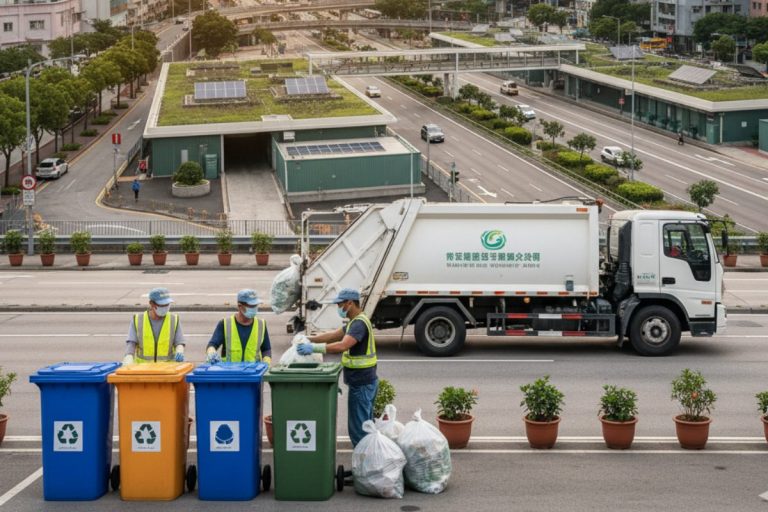
Our world is facing a water crisis due to pollution, climate change and a surging population growth of such magnitude that close to two billion people now live in water-stressed regions.  China is not excluded from the impending water threats – she has almost one-quarter of the world’s population but only 6 per cent of its fresh water.  Industrialization and urbanization have raised the demand for water and the pollution level to new heights. When we talk about the water problems in China, however, people often think of the severe pollution problem, i.e. the water resources management problem. People seldom pay attention to another equally vital problem: water supply management. read more…

[New Publication by GM]: “European Companies Lobbying in China and Chinese Reponses”

2010 June 11
by water


“For labor unionists, activists, scholars and advocates who are outside of China — but deeply interested in what happens inside China — the process of going beneath the surface of things is very daunting. In the last three decades capitalists have made themselves at home in China and, along with international finance and trade envoys, political representatives and their allies within academia, think tanks, media and public relations, they have burrowed into Chinese government and business elites to powerfully advance their own interests. read more…

Condemn Honda and the AFCTU branch for suppressing the workers’ strike!

2010 June 2
tags:
by Globalization Monitor

Global Appeal
Condemn Honda and the AFCTU branch for suppressing the workers’ strike!
Solidarity with Honda Workers’ Struggle for Higher Wages and Reorganization of the Shop Floor Trade Union

To brothers and sisters in trade unions and civil society, and all friends who are concerned about the labor situation in China:

Please read the BACKGROUND INFORMATION and sign the JOINT STATEMENT below it.

read more…

Global Appeal: Solidarity with Honda Workers’ Struggle to Demand Higher Wages and Reorganization of the Shop Floor Trade Union

2010 June 1
tags:
by water
Instead of helping them, the unionists attack the striking workers.

Instead of helping them, the unionists attack the striking workers.

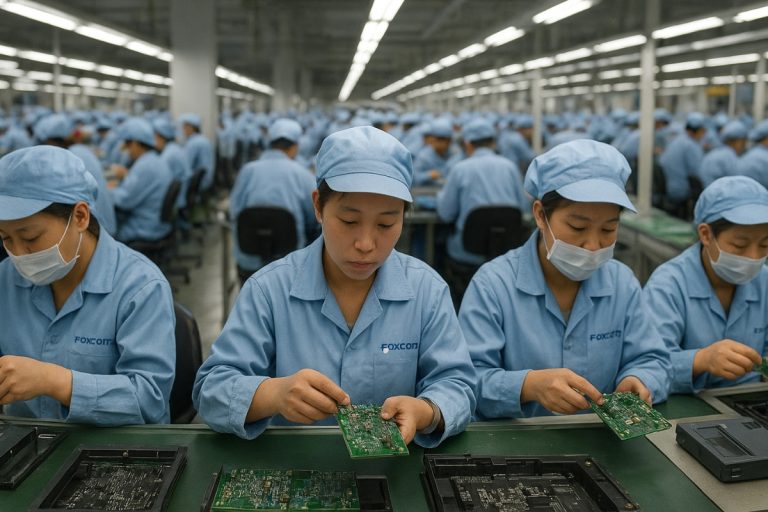
To brothers and sisters from trade unions, civil society and friends who are concerned about the labor situation in China:Honda Auto Parts Manufacturing Co., Ltd. located in Foshan City, Guangdong Province, has entered the 14th day of its strike. Of the many strikes by Chinese workers in recent years, this is one of the longest lasting. While many people are concerned and moved by the tragedy of Foxconn’s workers who have committed suicide by jumping from a building, the struggle of Honda workers undoubtedly is very encouraging. read more…

“We are extremely tired, with tremendous pressure” A Follow-up Investigation of Foxconn

2010 May 25
tags:
by Globalization Monitor

Source:China Labor Watch May 18, 2010


A worker at the massive electronics firm Foxconn’s Shenzhen plant is said to have just committed suicide by jumping from the roof of a building.  This incident is a tragedy by itself, but it is made more so by the fact that this is the ninth time that a Foxconn employee has killed himself or herself in the past year. Who will be the next?   The company must initiate a thoroughgoing analysis of life on its production lines—not just roll out more superficial, short-term fixes.

read more…

Suicide epidemic at Foxconn

2010 May 25
tags:
by Globalization Monitor

By Ji Beibei
Source: Global Times. 13 May 2010.

Six worker suicides in less than five months have put the management of Taiwan-based company Foxconn under a microscope again after another of its employees jumped from a building and died Tuesday in Shenzhen, Guangdong Province.

The six suicides and two-failed suicide attempts so far this year have prompted the company’s management to invite monks from Wutai Mountain, one of the most sacred Buddhist shrines, to pray for a positive working environment.

read more…

We Hold Maersk Dongguan Responsible for the Death of Mr. Mo

2010 March 22
by Globalization Monitor

Mr. Mo Desong worked for MCID (Maersk Container Industry Dongguan Ltd) for three years since 2006. He died on October 30, 2009, after falling ill nine months earlier. He was diagnosed as having chronic occupational diseases and mild benzene poisoning, and died of multiple organ failure. MCID had delayed Mo’s application for occupational diseases diagnosis and treatment for five months. His death might have been avoided if MCID had not obstructed both the sending of Mo to the Guangdong Provincial Hospital for Prevention and Treatment of Occupational Diseases (Occupational Hospital hereafter) in time, and the providing of necessary documents to this hospital for Mo’s diagnosis within the time limit set by this hospital.

Mo Desong

Download the full report (439KB, PDF)

read more…

Investigation and Monitoring of the Post-MFA Impact in China

2010 February 24
by Globalization Monitor

31 December 2004 marks the end of the Multi-Fibre Arrangement (MFA), a thirty-year old quota system for textile and garment exports from developing countries to developed countries. The common speculations prior to the MFA expiration have been that soaring Chinese and Indian exports, declining trade for smaller countries such as Bangladesh, Sri Lanka, cheaper prices for consumers in the developed countries, further job loss of textile and garment workers in the developed countries.

This research aims to analyse, shortly before the fifth anniversary of the Post-MFA era, what have been “accomplished” and how many of the speculations have become reality. It would look into the following aspects: 1) the reality of outputs, trade and productivity growth, as well as the number of enterprises of China’s textile and garment industry; 2) the employment trend and the Post-MFA era’s influence on the livelihood of the millions Chinese workers who are employed in the textile and garment industry, if any measures, have been taken by the government, factory owners, foreign buyers or workers themselves, to ensure them a decent work environment and living, or if the appalling labour conditions, which is commonly found in the textile and garment industry continue to prevail; 3) how the textile and garment industry in China weathers the stormy global financial crisis and its priorities.

Download the full report (494KB, PDF)

An open secret: Chinese manufacturers use toxic cadmium in jewelry despite health risks

2010 January 13
by Globalization Monitor

ALEXA OLESEN, EUGENE HOSHIKO
Associated Press Writers
January 12, 2010

YIWU, China (AP) — For China’s low-cost jewelry makers, it was an open trade secret: The metal cadmium is shiny, strong and malleable at low temperatures, regardless of its health hazards. And it’s cheap.
read more…

Cadmium

2010 January 13
by Globalization Monitor

Cadmium (Cd), is a silvery white coloured heavy metal. Resistant to corrosion and abrasion, it is a common carcinogenic chemical with a soft texture that is extremely elastic. It is non-degradable and therefore poses an environmental hazard when discarded as industrial waste. The International Agency for Research on Cancer (IARC) classifies cadmium and its compounds as Group 1 of carcinogen for humans.[1] When inhaled, cadmium is eliminated from the human body via urine. However, the amount of cadmium excreted daily in this manner is very small. It represents only about 0.005 – 0.01% of the total body burden which corresponds to a biological half-life for cadmium of about 20-40 years.[2] Consequently cadmium causes long-term damage to many organs and tissues, especially the kidneys and skeletal structure. In Japan cadmium related diseases were called Itai-itai disease, with ‘itai’ means ‘painful’. The severe bone pains induced by cadmium poisoning caused such distress that victims would cry out “Pain! Pain!” read more…